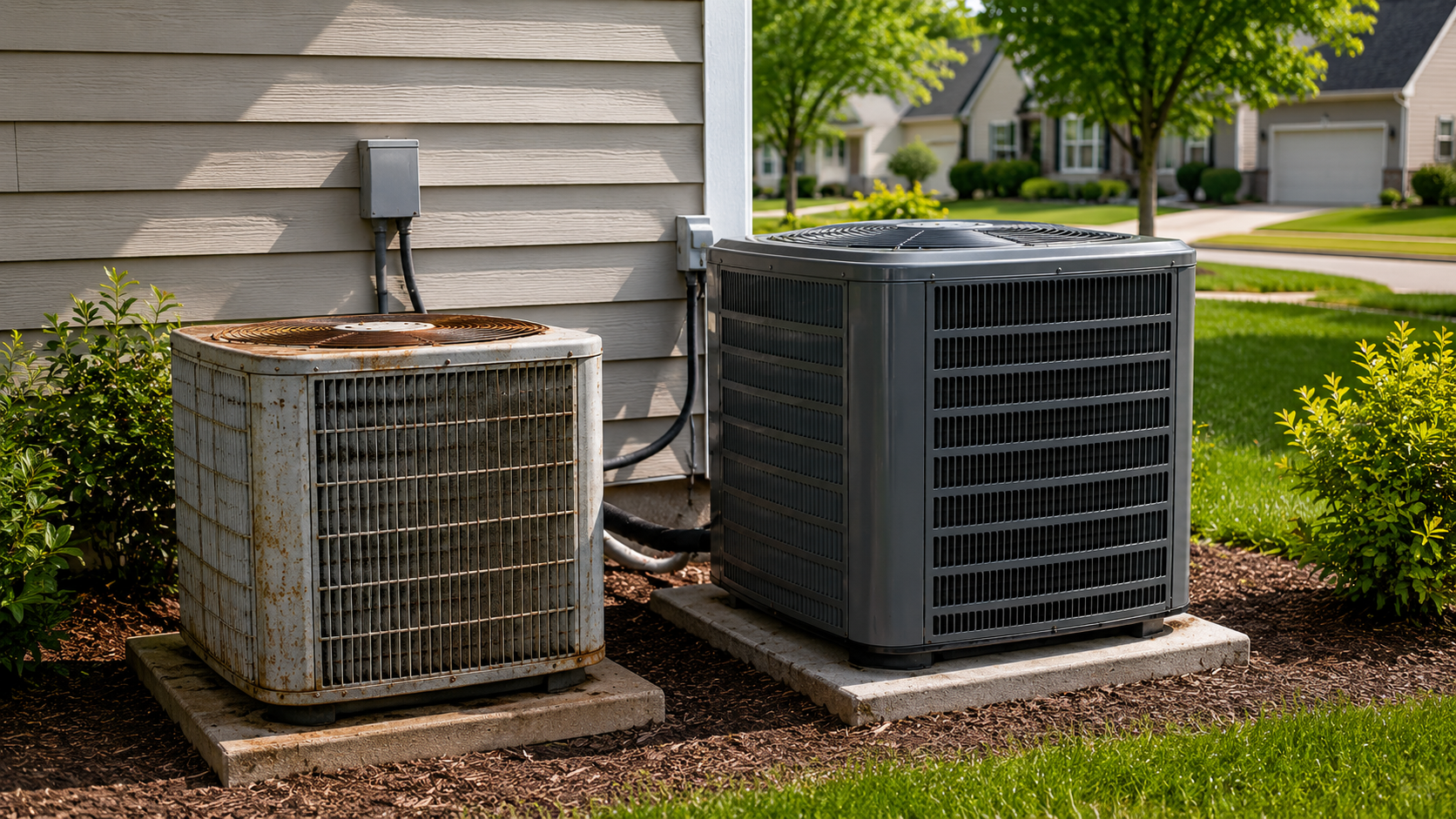
Whether your air conditioner suddenly stops cooling or has been struggling for months, one question inevitably comes up: Should you invest in an AC Repair or is it finally time for an AC Replacement?
Many North Carolina homeowners face this dilemma every summer. While repairing your system is often the most affordable solution, replacing an aging unit can save money on energy bills and prevent frequent breakdowns in the long run.
The right choice depends on several factors, including your AC’s age, repair costs, energy efficiency, and overall condition. In this guide, we’ll explain when AC Repair makes sense, when AC Replacement is the smarter investment, and how to make the best decision for your home.
Quick Answer: AC Repair or AC Replacement?
If your air conditioner is under 10 years old and the problem is minor, AC Repair is usually the most cost-effective choice. However, if your system is 15 years or older, needs frequent repairs, or has major component failures such as a compressor or evaporator coil, AC Replacement is often the better long-term investment. A professional HVAC inspection can help determine which option provides the best value based on your system’s condition and expected lifespan.
Quick Decision Guide
If…
Best Option
Your AC is less than 10 years old
AC Repair
The repair is minor and affordable
AC Repair
Your system has required multiple repairs recently
AC Replacement
Your AC is over 15 years old
AC Replacement
Your energy bills keep increasing
AC Replacement
A major component like the compressor, has failed
AC Replacement
AC Repair vs AC Replacement at a Glance
Factor
AC Repair
AC Replacement
Upfront Cost
Lower
Higher
Best For
Minor issues and newer systems
Older systems with major problems
Energy Efficiency
No significant improvement
Higher efficiency and lower utility bills
Expected Lifespan
Extends existing unit
Starts a new 15–20 year lifespan
Long-Term Savings
Depends on condition
Often better for aging systems
Warranty
Limited on repaired parts
New manufacturer warranty
For newer air conditioners with isolated problems, AC Repair is usually the better option. However, older systems with recurring issues often benefit more from AC Replacement.
When AC Repair Is the Better Choice
Not every cooling problem means you need a brand-new system. In many cases, repairing your existing air conditioner is the most practical and budget-friendly solution.
Consider AC Repair if:
Your unit is less than 10 years old.
Repairs are relatively inexpensive.
Cooling performance has been reliable until recently.
The issue involves components like the capacitor, thermostat, contactor, or fan motor.
Your energy bills haven’t increased significantly.
Example
A homeowner in Cary notices their AC isn’t starting. After inspection, the technician finds a failed capacitor. Replacing this affordable part restores normal operation without replacing the entire system.
If your air conditioner only has one isolated problem, repairing it can add several more years to its service life.
Sometimes repairs only delay the inevitable. Continuing to repair an old, inefficient system can end up costing more than installing a newer model.
Consider AC Replacement if:
Your system is over 15 years old.
Repairs are becoming frequent.
Energy bills continue rising.
Your home never feels consistently comfortable.
The compressor or evaporator coil has failed.
Your unit still uses R-22 refrigerant.
Older systems also struggle to keep up with North Carolina’s long, humid summers, placing additional stress on major components.
Replacing an outdated system can improve comfort, reduce monthly energy costs, and lower the likelihood of emergency breakdowns.
The $5,000 Rule: Repair or Replace?
Many HVAC professionals use a simple guideline when evaluating whether to repair or replace an air conditioner.
Multiply:
Age of your AC × Estimated Repair Cost
If the result approaches or exceeds $5,000, replacement is often the better long-term investment
Example
AC Age
Repair Cost
Result
Recommendation
6 years
$450
$2,700
Repair
9 years
$550
$4,950
Repair may still be worthwhile
14 years
$700
$9,800
Replacement is usually smarter
While this rule isn’t perfect, it provides a helpful starting point when making a decision.
Key Factors to Consider Before Making a Decision
AC Repair vs AC Replacement Cost Comparison
Expense
Repair
Replacement
Initial Investment
Lower
Higher
Monthly Energy Bills
May stay the same
Minimal during warranty
Future Repair Costs
May increase over time
Minimal during warranty
Warranty Coverage
Limited
Manufacturer warranty
Overall Value
Better for newer units
Better for aging systems
While AC Repair usually costs less upfront, AC Replacement often delivers greater value over the long term for older systems.
How Regular Maintenance Helps You Avoid Both
Routine maintenance is one of the easiest ways to delay costly repairs and extend the life of your cooling system.
Annual inspections help technicians identify worn parts before they fail, improve efficiency, and keep your air conditioner running reliably during peak summer temperatures.
Scheduling regular tune-ups can also reduce the chances of facing the repair-versus-replacement decision earlier than necessary. To keep your system operating efficiently, follow the recommendations in AC Services in NC: Repair, Maintenance & Installation Explained and schedule seasonal maintenance before summer arrives.
Beat the Summer Rush — Book Your Tune-Up Now
We serve Cary, Chapel Hill, Morrisville, Raleigh, and Apex.
A professional inspection is the best way to determine which option provides the greatest long-term value.
Final Thoughts
Deciding between AC Repair and AC Replacement isn’t just about today’s repair bill. It’s about long-term comfort, energy efficiency, and avoiding unexpected breakdowns during North Carolina’s hottest months.
If you’re unsure which option is right for your home, a professional HVAC inspection can provide a clear recommendation based on your system’s age, condition, and repair history. Whether you need a quick repair or a complete system upgrade, Greenergy Air is here to help you make an informed decision with honest recommendations and reliable service.
Need professional help?
Our AC Services team can inspect your system and recommend the most cost-effective solution for your home.
There’s never a convenient time for your air conditioner to stop working. Unfortunately, many breakdowns happen on the hottest days of summer when your system is already under the most stress.
Your air conditioner often gives warning signs before it fails. Weak airflow, warm air, strange noises, unpleasant odors, frequent cycling, higher energy bills, water leaks, uneven cooling, excess indoor humidity, and an unresponsive thermostat are all signs that your AC may need professional attention. Catching these problems early can help you avoid costly repairs and unexpected breakdowns.
While some AC problems can be fixed with a simple repair, others may require routine maintenance or even a system replacement. Understanding the difference can help you make smarter decisions and avoid unnecessary expenses. Our guide to AC Services in NC explains how repairs, maintenance, and installations work, so you’ll know what to expect before scheduling service.
Don’t Ignore the Little Changes
Most homeowners expect their air conditioner to either work or stop working. In reality, AC systems usually fail gradually.
Maybe your home takes longer to cool than it did last summer. Perhaps one bedroom always feels warmer than the rest of the house, or you’ve started hearing a noise that wasn’t there before. These changes might seem minor at first, but they’re often your system’s way of telling you that something needs attention.
North Carolina summers can be especially demanding on cooling systems. Long periods of heat and humidity force your AC to run for hours every day, so even a small issue can quickly become a bigger problem if ignored.
Knowing what to look for can save you money, improve your home’s comfort, and help your system last longer.
1. Your Home Takes Longer to Cool
One of the first things homeowners notice is that the house just doesn’t cool as well as it used to.
You set the thermostat to the same temperature as always, but it seems to take much longer to reach it. In some cases, the AC never quite gets there.
Several issues can cause this, including:
A dirty air filter
Restricted airflow
Low refrigerant
Dirty outdoor condenser coils
An aging compressor
Before assuming the worst, replace the air filter if it’s overdue. If cooling performance doesn’t improve after a day or two, it’s worth having the system inspected.
Waiting too long can force your AC to work much harder than necessary, increasing wear on expensive components.
2. Some Rooms Are Cool While Others Stay Warm
Does your living room feel comfortable while the upstairs bedroom feels like a completely different season?
Uneven temperatures are a common sign that your cooling system isn’t distributing air properly.
The problem could be caused by:
Leaky ductwork
Blocked vents
An undersized system
Airflow restrictions
Blower motor issues
While closing vents in unused rooms might seem like a good idea, it can actually create pressure problems that make cooling less effective.
If certain rooms have always been difficult to cool, mention that during your service appointment. It helps the technician narrow down the possible causes more quickly.
3. Strange Noises That Weren’t There Before
Every air conditioner makes some noise while running. What you shouldn’t hear are new or unusually loud sounds.
Here’s what different noises may indicate:
Sound
What It Could Mean
Banging
Loose or damaged internal parts
Grinding
Motor bearings are wearing out
Buzzing
Electrical issue or loose component
Hissing
Possible refrigerant leak
Clicking
Electrical control problem
A strange sound doesn’t always mean a major repair is coming, but it’s rarely something that fixes itself.
Turning up the TV to ignore it usually isn’t the best long-term solution.
4. Your Energy Bill Suddenly Increases
If your electricity usage hasn’t changed but your utility bill has, your air conditioner could be using more energy than it should.
As parts wear down, the system has to run longer to produce the same level of cooling.
Common reasons include:
Dirty coils
Low refrigerant
Poor airflow
Failing electrical components
Lack of regular maintenance
A gradual increase over several years is normal as equipment ages. A sudden spike, however, is often worth investigating.
5. Your AC Keeps Turning On and Off
On a hot North Carolina afternoon, it’s normal for your air conditioner to cycle on and off as it maintains the temperature you’ve set. But if it starts running for only a few minutes before shutting off, then starts again shortly after, something isn’t right.
This is known as short cycling, and it’s one of the more common issues HVAC technicians see during the cooling season.
Several things can cause it, including:
A thermostat that’s not reading the room temperature correctly
A clogged air filter restricts airflow
Low refrigerant levels
An oversized AC system
Electrical or compressor problems
Short cycling doesn’t just affect comfort. Every time your system starts, it uses a surge of electricity. When that happens repeatedly throughout the day, it puts extra strain on components that are designed for longer, steady cooling cycles.
If your AC has been cycling like this for more than a day or two, it’s worth having it checked before the problem gets worse. Before the hottest months arrive, it’s also a good idea to complete a few basic maintenance tasks. Our guide to preparing your AC for a North Carolina summer covers simple steps to improve your system’s performance.
6. You Notice Water Around the Indoor Unit
Finding a small puddle near your indoor AC unit can be surprising, but it’s not something to ignore.
As your air conditioner cools your home, it also removes moisture from the air. That water normally drains away through a condensate line. If the drain becomes clogged or another component fails, water can back up and leak into your home.
Possible causes include:
A clogged condensate drain line
A cracked drain pan
A frozen evaporator coil
A blocked condensate pump
Besides damaging your AC, water leaks can also affect flooring, drywall, and nearby furniture. If moisture sits for too long, it can create conditions that make mold more likely to develop.
If you notice standing water around your system, turn it off and schedule service rather than letting it continue to run.
7. Your Home Feels More Humid Than Usual
One of your air conditioner’s jobs is to control indoor humidity.
If your home suddenly feels sticky even though the AC is running, the system may no longer be removing moisture effectively.
You might notice:
The air feels damp indoors.
Windows develop condensation.
Bedding or furniture feels slightly clammy.
The thermostat says the temperature is comfortable, but the house doesn’t feel comfortable.
High humidity often points to airflow issues, refrigerant problems, or an air conditioner that’s no longer operating efficiently.
Since North Carolina summers are naturally humid, even a small drop in your AC’s performance can make your home feel much warmer than the thermostat reading suggests.
8. Unpleasant Smells Every Time the AC Runs
Your air conditioner shouldn’t make your home smell worse.
If you notice an unusual odor each time it starts, it’s usually a sign that something inside the system needs attention.
Here are a few common examples:
If it smells like…
It could mean…
Musty or damp
Moisture buildup or mold inside the system
Burning
An overheating electrical component
Chemical-like
A possible refrigerant leak
Rotten or stale
Debris, pests, or bacteria inside the unit or ductwork
9. Your Thermostat Doesn’t Seem to Match the Room Temperature
Your thermostat is the brain of the entire cooling system. If it isn’t working properly, your AC can’t respond as it should.
You may notice situations like these:
The thermostat says 72°F, but the house feels much warmer.
The AC doesn’t turn on when you lower the temperature.
The system keeps running long after the room feels cool.
Temperatures fluctuate throughout the day.
Sometimes the issue is as simple as weak batteries or incorrect settings. Other times, the thermostat may need recalibration or replacement.
A technician can usually determine whether the problem is the thermostat itself or another part of the HVAC system that’s causing inaccurate readings.
10. You’ve Been Putting Off the Same Small Problem
This last sign is easy to overlook because it often becomes part of your routine.
Maybe your AC makes a strange noise every evening.
Maybe one room has never cooled properly.
Maybe you’ve been resetting the thermostat every few days.
Or perhaps you’ve simply gotten used to the system taking longer to cool the house.
Small issues rarely stay small forever.
Many major repairs start with symptoms that homeowners ignore because the system is still “working.” By the time it stops completely, the repair is often more complicated and more expensive than it would have been weeks earlier.
If you’ve noticed the same problem all summer, consider scheduling an inspection before peak demand or another heat wave puts even more stress on the system.
Repair It Early
Wait Until It Breaks
Smaller repairs are often less expensive.
Minor problems can turn into major component failures.
Your AC runs more efficiently.
Higher energy bills as the system struggles to cool your home.
Better indoor comfort during hot weather.
Greater chance of losing cooling during extreme heat.
Helps extend the life of your equipment.
More wear on the compressor, blower motor, and other critical parts.
Gives you time to schedule service at your convenience.
Emergency repairs may take longer during the busiest part of summer.
When Should You Call an HVAC Professional?
Not every issue means your air conditioner is about to fail, but it’s not always easy to tell which problems are minor and which need immediate attention.
You should schedule an inspection if you notice:
Weak or uneven cooling that doesn’t improve after changing the air filter
Warm air coming from the vents
Loud or unusual noises during operation
Water is leaking around the indoor unit
Short cycling or frequent starts and stops
A sudden increase in your energy bill without a clear reason
Persistent humidity or musty odors indoors
A trained technician can identify the underlying cause before it leads to a more expensive repair. In many cases, fixing a small issue early helps prevent unnecessary wear on the rest of the system. If you’re experiencing any of these warning signs, our AC repair services can help diagnose the issue and restore your system before it causes a major breakdown.
Your air conditioner rarely stops working without warning. More often, it gives small clues that something isn’t right. Paying attention to those changes can help you avoid unexpected breakdowns, reduce repair costs, and keep your home comfortable throughout North Carolina’s hottest months.
If you’ve noticed one or more of these warning signs, don’t assume they’ll go away on their own. A timely inspection can often resolve the issue before it becomes a much larger problem.
Don’t Wait for a Complete Breakdown
Many costly AC repairs begin as small problems that are easy to overlook. Taking action when you first notice changes in your system’s performance can save you money, reduce energy costs, and help your air conditioner last longer. If your AC isn’t cooling properly, schedule an AC repair with Greenergy Air. We’ll identify the problem, explain your options, and help restore comfort to your home as quickly as possible.
When summer temperatures climb across North Carolina, a reliable air conditioning system quickly becomes one of the most important parts of your home. Whether your AC is blowing warm air, making unusual noises, or simply isn’t cooling efficiently, knowing when to schedule professional AC services can save you from costly repairs and uncomfortable days indoors.
Many homeowners wait until their system completely stops working before calling an HVAC professional. Unfortunately, that approach often leads to higher repair costs, emergency service calls, and unnecessary stress during the hottest months of the year.
This guide explains everything homeowners should know about professional AC services, including repairs, maintenance, installation, common warning signs, expected costs, and tips for extending the life of your cooling system. Whether you need routine maintenance or emergency AC repair service, understanding your options helps you make informed decisions that protect both your comfort and your investment.
What Are AC Services?
AC services include professional inspection, maintenance, repair, installation, replacement, and performance optimization of residential air conditioning systems. These services help improve cooling efficiency, lower energy bills, extend equipment lifespan, and prevent unexpected breakdowns.
Professional air conditioning services typically include:
AC repair
Preventive maintenance
Seasonal tune-ups
Refrigerant checks
Thermostat testing
Air filter replacement
Electrical inspections
Condenser cleaning
Evaporator coil cleaning
Complete AC installation and replacement
Why Professional AC Services Matter
Your air conditioner works harder than many other appliances in your home. During a North Carolina summer, it may run for several hours each day to maintain comfortable indoor temperatures.
Over time, normal wear affects components such as:
Compressor
Condenser coil
Evaporator coil
Capacitor
Contactor
Blower motor
Refrigerant lines
Electrical connections
Drain line
Ignoring small problems often causes larger system failures later.
For example, a clogged condensate drain might seem minor, but if left untreated, it can lead to water damage, mold growth, and expensive repairs.
Routine maintenance catches these issues early before they become major expenses.
Types of Air Conditioning Services
Professional HVAC companies offer a range of AC services tailored to your home’s needs.
Service
Purpose
Best Time
AC Inspection
Evaluate overall system condition
Before summer
AC Maintenance
Prevent future problems
Once or twice yearly
AC Repair Service
Fix damaged components
When issues appear
AC Installation
Install a new cooling system
New construction or replacement
AC Replacement
Upgrade aging equipment
After 12–15 years
Emergency AC Services
Restore cooling quickly
System breakdowns
Each service addresses a different stage of your system’s lifespan.
Signs You Need AC Repair Service
Most air conditioners provide early warning signs before they stop working completely.
Contact a professional if you notice:
Warm Air Coming from Vents
If your thermostat is set correctly but warm air continues blowing, the issue could involve:
Refrigerant leaks
Compressor failure
Dirty evaporator coils
Electrical issues
Weak Airflow
Poor airflow often indicates:
Dirty air filters
Blocked ducts
Failing blower motor
Frozen evaporator coil
If blocked or dirty ductwork is restricting airflow, professional Air Duct Cleaning can help improve airflow and overall HVAC performance.
Reduced airflow forces your AC to work harder while cooling less effectively.
Strange Noises
Different sounds point to different problems.
Noise
Possible Cause
Banging
Loose internal component
Buzzing
Electrical issue
Grinding
Motor bearings
Hissing
Refrigerant leak
Clicking
Faulty relay or thermostat
Rising Energy Bills
If your electricity bill suddenly increases without increased usage, your air conditioner may be losing efficiency.
Common reasons include:
Dirty coils
Low refrigerant
Aging compressor
Clogged filters
Failing capacitor
A professional inspection can identify the source before energy waste continues.
Frequent Cycling
An air conditioner should complete consistent cooling cycles.
If it turns on and off every few minutes, possible causes include:
Incorrect thermostat placement
Oversized equipment
Refrigerant problems
Dirty coils
Electrical faults
Water Around the Indoor Unit
Water pooling around your system often indicates:
Clogged condensate drain
Frozen evaporator coil
Drain pan damage
Prompt repairs help prevent water damage inside your home.
Beat the Summer Rush — Book Your Tune-Up Now
We serve Cary, Chapel Hill, Morrisville, Raleigh, and Apex.
Many homeowners focus on repairs but overlook preventive maintenance.
Routine service offers several advantages:
Lower Utility Bills
A clean, properly adjusted system consumes less electricity while delivering better cooling performance.
According to the U.S. Department of Energy, replacing dirty air filters and scheduling regular maintenance are two of the simplest ways to improve HVAC efficiency and reduce energy costs.
Fewer Emergency Repairs
Technicians identify worn components before they fail unexpectedly during peak summer temperatures.
Longer Equipment Life
Well-maintained air conditioners often last several years longer than neglected systems.
Better Indoor Air Quality
Routine maintenance also helps improve Indoor Air Quality by reducing the buildup of dust, pollen, pet dander, and other airborne contaminants that circulate through your HVAC system.
Maintenance includes cleaning components that affect airflow, helping reduce:
Dust
Pollen
Pet dander
Mold spores
This creates a healthier indoor environment for your family.
Improved Cooling Performance
Routine tune-ups help your system:
Cool rooms more evenly
Reach desired temperatures faster
Reduce humidity
Maintain consistent comfort
As temperatures begin to rise, seasonal maintenance becomes even more important. Taking time to prepare your AC for a North Carolina summer can improve cooling performance, reduce energy costs, and help prevent unexpected breakdowns during peak heat.
Why AC Services Are Especially Important in North Carolina
North Carolina’s climate places significant demand on residential cooling systems.
Homeowners often deal with:
High summer temperatures
Elevated humidity
Heavy pollen during spring
Extended cooling seasons
Sudden heat waves
These conditions cause air conditioners to operate longer and work harder than in many cooler regions.
Scheduling seasonal AC services helps prepare your system before peak demand while reducing the likelihood of midsummer breakdowns.
AC Repair vs. AC Replacement: Which One Do You Need?
One of the biggest questions homeowners face is whether to repair their existing air conditioner or invest in a new system. The answer depends on your unit’s age, repair history, efficiency, and repair costs.
In many cases, a professional inspection can determine which option provides the best long-term value.
Factor
AC Repair
AC Replacement
System Age
Under 10 years
12 to 15+ years
Repair Cost
Minor to moderate
Frequent expensive repairs
Energy Efficiency
Still performs well
Outdated, high utility bills
Breakdown History
Occasional issues
Multiple repairs every year
Warranty
Still covered
Warranty expired
Long-Term Value
Lower upfront cost
Lower operating costs over time
Repair Is Usually the Better Choice If:
The unit is less than 10 years old.
Repairs are relatively inexpensive.
Cooling performance has been good overall.
There are no major refrigerant or compressor issues.
Replacement May Be Better If:
The system is over 15 years old.
Repairs are becoming more frequent.
Energy bills continue to increase.
The compressor has failed.
Your current unit uses older refrigerants that are becoming harder to source.
Pro Tip: Many HVAC professionals follow the “50% Rule.” If the repair cost exceeds 50% of your current system’s value, replacement is often the smarter investment. What Happens During Professional AC Services?
For example, one North Carolina homeowner thought their aging AC needed to be replaced because it wasn’t cooling the second floor properly. After a professional inspection, the issue turned out to be a clogged condenser coil and a failing capacitor. Once those components were serviced, the system returned to normal operation, saving the homeowner from having to replace the entire unit.
What Happens During Professional AC Services?
During a professional AC service, an HVAC technician inspects, cleans, and tests your air conditioning system. This typically includes checking the thermostat, replacing or inspecting air filters, cleaning coils, testing electrical components, inspecting refrigerant levels, clearing the condensate drain, and verifying overall system performance.
A comprehensive AC service typically includes the following steps:
1. Thermostat Inspection
The technician verifies that the thermostat is communicating properly with your HVAC system and maintaining accurate temperatures. If the thermostat isn’t functioning correctly, professional Thermostat Services can help restore comfort and improve energy efficiency.
2. Air Filter Check
Dirty filters restrict airflow, reduce efficiency, and increase energy consumption.
If needed, the technician recommends replacing or cleaning the filter.
3. Electrical Inspection
Electrical components are tested, including:
Capacitors
Contactors
Wiring
Safety controls
Voltage readings
Loose electrical connections are one of the leading causes of unexpected AC failures.
4. Refrigerant Inspection
The technician checks refrigerant pressure and looks for leaks that could reduce cooling performance.
Low refrigerant is not considered normal and usually indicates a leak that should be repaired.
5. Condenser Coil Cleaning
Outdoor coils collect:
Dirt
Grass clippings
Leaves
Pollen
Cleaning the coils helps the system release heat efficiently.
6. Evaporator Coil Inspection
Indoor coils are inspected for dirt, ice buildup, or airflow restrictions.
7. Drain Line Cleaning
Condensate drain lines are cleared to help prevent:
Water leaks
Mold growth
Water damage
8. Performance Testing
Before leaving, the technician measures:
Airflow
Temperature split
Refrigerant pressure
System cycling
Overall cooling performance
Types of Air Conditioning Systems
Different homes require different cooling solutions.
Understanding the available systems helps homeowners make informed decisions.
System Type
Best For
Advantages
Central Air Conditioning
Most single-family homes
Whole-home comfort
Heat Pump
Year-round heating and cooling
High energy efficiency
Mini Split System
Room additions, garages, older homes
No ductwork required
Packaged HVAC System
Limited indoor space
Compact installation
A qualified HVAC contractor can recommend the right option based on your home’s size, insulation, and cooling needs.
How Much Do AC Services Cost in North Carolina?
Pricing depends on the type of service, your system’s age, and whether any repairs are needed.
As a general snapshot:
Service
Typical Price Range
AC Inspection or Tune-Up
$75 to $200
Common Repairs (capacitor, thermostat, drain line)
$100 to $500
New AC Installation
$5,000 to $12,000+
Repair and installation costs also vary depending on the specific issue and equipment involved. For a full breakdown of service call fees, tune-up pricing, maintenance plans, and what a real invoice looks like, see our complete guide to AC service costs in North Carolina.
The best way to receive accurate pricing is to schedule an on-site inspection with a licensed HVAC professional.
How Often Should You Schedule AC Services?
Most air conditioning systems should receive professional maintenance once a year, ideally before summer begins. Homes with heavy AC usage may benefit from two maintenance visits each year.
For most North Carolina homeowners, professional maintenance should be scheduled at least once a year.
If your system runs heavily during long summers or you have pets, twice-yearly maintenance may be beneficial.
Recommended Maintenance Schedule
Time of Year
Recommended Service
Early Spring
Full AC tune-up
Summer
Monitor performance and replace filters
Fall
HVAC inspection if using a heat pump
Every 1 to 3 Months
Replace or clean the air filter
Preventive maintenance before summer reduces the risk of breakdowns during the peak cooling season.
How to Choose the Right AC Repair Service
Not every HVAC contractor offers the same level of expertise or customer service.
When comparing providers, look for these qualities:
Common AC Problems Homeowners Face
Understanding common issues can help you recognize problems early.
Problem
Possible Cause
AC won’t turn on
Electrical issue or thermostat problem
Warm air
Refrigerant leak or compressor issue
Frozen coil
Dirty filter or restricted airflow
Water leak
Clogged condensate drain
High humidity indoors
Oversized system or poor maintenance
Weak airflow
Dirty filter, blower issue, or duct restriction
Frequent cycling
Thermostat issue or oversized unit
High electric bills
Dirty coils or aging equipment
Mistakes Homeowners Should Avoid
Even with the best intentions, some maintenance habits can do more harm than good.
Avoid these common mistakes:
Ignoring unusual noises or odors
Waiting until the system stops working
Forgetting to replace air filters
Blocking outdoor condenser units with plants or debris
Closing too many supply vents
Skipping annual maintenance
Attempting DIY refrigerant repairs
Hiring contractors based solely on the lowest price
Addressing small issues early often prevents more expensive repairs later.
Quick Homeowner Checklist
Before scheduling AC services, ask yourself:
Is my AC cooling every room evenly?
Has my energy bill increased recently?
Have I changed the air filter recently?
Is my outdoor unit free of debris?
Do I hear unusual sounds?
Is the thermostat working properly?
Has it been more than a year since my last tune-up?
If you answered “Yes” to any of the concerns above, it’s a good time to schedule a professional inspection.
Why Homeowners in North Carolina Trust Professional AC Services
North Carolina’s hot summers and high humidity place extra stress on residential air conditioning systems. A properly maintained AC unit doesn’t just keep your home comfortable. It also helps control indoor humidity, improve air quality, and reduce monthly energy costs.
Whether you need a quick AC repair service, seasonal maintenance, or a complete system replacement, working with experienced HVAC professionals helps ensure your equipment operates safely and efficiently throughout the cooling season.
Regular service protects your investment, minimizes unexpected breakdowns, and gives you peace of mind when temperatures rise.
Conclusion
Your air conditioner is one of the hardest-working systems in your home. Giving it the attention it needs through regular inspections, timely repairs, and preventive maintenance can help you avoid expensive breakdowns while improving comfort and energy efficiency.
If you’ve noticed uneven cooling, rising utility bills, strange noises, or reduced airflow, don’t wait for the problem to get worse. Addressing small issues early can save you time, money, and frustration.
For homeowners across North Carolina, professional AC services are one of the smartest ways to keep your home cool, comfortable, and energy efficient all summer long.
Need Professional AC Services in North Carolina?
Whether your air conditioner needs a quick repair, seasonal maintenance, or a complete replacement, Greenergy Air is here to help. Our experienced technicians provide reliable AC services for homeowners across Cary, Raleigh, Apex, Morrisville, Chapel Hill, and nearby communities. Don’t wait for a small issue to become an expensive repair. Contact Greenergy Air today to schedule your AC service and enjoy dependable comfort all season long.
Call us today or request your appointment online to get started.
 MJ with Greenergy
